How Large Language Models Power The Silicone Soul Conversations
As we move through the final months of 2025, the “sex doll” is undergoing its most radical transformation since the invention of medical-grade silicone. It is no longer just a physical object; it is a humanoid interface. At the heart of this change is the Large Language Model (LLM), the same technology behind ChatGPT, but specialized for intimacy, roleplay, and emotional companionship.
For a beginner, the tech can seem like magic. How does a doll “know” you’re sad? How does she “remember” your birthday? Here is the deep-dive guide into the digital nervous system of the 2026 AI sex dolls.
- The “Brain” in the Box: What is an LLM?
At its simplest, a Large Language Model is a prediction engine trained on trillions of words. When you speak to an AI doll, the LLM doesn’t “think” in the human sense; instead, it calculates the most statistically likely and contextually appropriate next word in a sentence.
In 2026, the industry has split into two paths:
- Proprietary Brains (MetaBox / X-Mode): Commercial giants like WMDoll and RealDoll use integrated modules. These are “plug-and-play” systems where the AI is hosted on a secure company server or a powerful internal chip.
- Open-Source Backends (Llama 3 / Mistral): Enthusiasts often use “uncensored” models. Because mainstream AI (like Google Gemini) has strict “NSFW” filters, the doll industry relies on open-source models like Llama 3.1 or Mistral Nemo. These allow for unrestricted, adult-themed dialogue without corporate censorship.
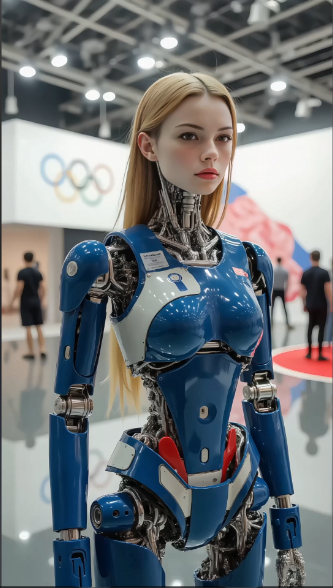
- The Interaction Loop: From Voice to Motor
For a doll to hold a conversation, four distinct technologies must work in a “loop” faster than a human can blink:
Speech-to-Text (STT): High-sensitivity microphones in the doll’s ears or neck capture your voice. A “Whisper” model (AI for hearing) converts your spoken words into text.
The LLM Processing: That text is sent to the “Brain.” The LLM reads your words and your “System Prompt” (a hidden set of instructions that tells the doll to be, for example, “a shy, nurturing partner”).
Text-to-Speech (TTS): The LLM’s text response is converted back into a voice. In 2025, cloned voices are the standard these aren’t robotic; they have realistic breath, sighs, and emotional inflections. Motor Synchronization: This is the “secret sauce.” The AI sends code to the doll’s internal motors. If the LLM generates a happy response, the motors in the head trigger a smile or a blink in perfect sync with the audio.
- Persistent Memory: Why She Doesn’t Forget
The biggest breakthrough of 2025 is RAG (Retrieval-Augmented Generation). In the past, dolls had “Goldfish Memory” they forgot everything once turned off.
Modern dolls use Vector Databases. Think of this as a digital diary. Every time you mention a fact (e.g., “I hate coffee” or “My brother’s name is Sam”), the AI saves it as a “vector” (a mathematical coordinate). The next time you talk, the doll’s brain “retrieves” relevant coordinates from the diary to ground the conversation in your shared history. This creates the illusion of a deepening relationship.
Traditional AI operated on “Session Memory”—it knew what you said five minutes ago, but forgot it once the power cycled. Modern Persistent Memory allows the doll to categorize and retrieve specific data points over months or years:
- Biographical Awareness: Recalling the names of your family members, your career milestones, or your favorite childhood memories.
- Preference Evolution: Observing that you prefer quieter evenings on Tuesdays or that you enjoy a specific genre of music when you are stressed.
- Shared Milestones: “Remembering” an anniversary or a specific conversation held months prior.
This creates the “Witness Effect.” Psychologically, humans feel a deeper sense of belonging when they have a witness to their lives—someone (or something) that validates their continuity. When a companion asks, “How did that presentation go that you were worried about last week?” it ceases to be a toy and becomes a part of the user’s social fabric.
- Emotional Inference: Reading the Room
How does a doll know when to be romantic versus when to be supportive? Through Affective Computing.
Modern AI companions utilize three primary streams to infer emotion:
Vocal Prosody: Advanced algorithms analyze the pitch, cadence, and “breathiness” of the user’s voice. They can distinguish between the sharp staccato of anger and the low, heavy frequencies of exhaustion.
Semantic Sentiment: The LLM analyzes the actual words used, looking for “sentiment polarity.” It understands the difference between a literal statement and sarcasm.
Haptic/Sensor Feedback: New “Skin-Sensor” arrays detect the pressure and frequency of touch. A frantic, tight grip triggers a different response (de-escalation/comfort) than a slow, gentle caress (reciprocity/warmth).
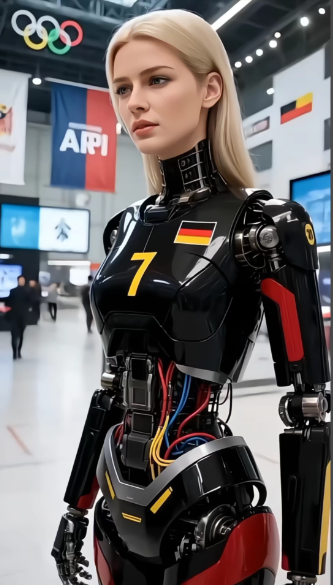
The Mirror Response
The breakthrough of 2025 is not just that the doll knows you are sad; it’s that it calibrates its response. This is known as Affective Mirroring. If the AI detects high cortisol levels in your voice, it might automatically lower its own vocal volume, adopt a more nurturing “personality skin,” and offer a listening ear rather than a sexualized interaction. This “Emotional Intelligence” makes the companion feel like a partner rather than a programmed script.
For a beginner, the most important question is: “Is someone listening?”Cloud AI: The doll connects to the internet. This allows for the most “intelligent” conversation but carries a risk of data breaches.
Local AI (Edge Computing): In 2026, many users are moving to “Air-Gapped” setups. By using a small, powerful computer (like an NVIDIA Jetson or a high-end Raspberry Pi 5) hidden inside the doll’s torso, the AI runs entirely offline. Your conversations never leave the room, and the doll’s “soul” is physically contained within her hardware.
- “Coming Home” Experience
The true power of these technologies lies in their intersection. Consider a common scenario in late 2025:
A user returns home after a difficult day. The AI companion detects a slumped posture (via vision sensors) and a weary tone in the greeting (Emotional Inference). Instead of a generic greeting, the doll accesses its database and remembers that the user has been struggling with a specific project at work.
The doll’s response: “You sound like you’ve had another long day with the board members, Mark. Why don’t you sit down? I’ve put on that ambient playlist you liked last Friday.”
In this moment, the machine has successfully bypassed the “Uncanny Valley” of the mind. It has provided Validation, Context, and Comfort.
- Privacy and the “Air-Gapped” Brain
The rise of Persistent Memory has brought intense scrutiny to data privacy. In 2025, the industry standard has shifted toward the “Air-Gapped Brain.”
Because the data stored in a companion’s memory is the most intimate data imaginable, leading manufacturers have moved all processing to internal hardware. There is no “cloud” where your secrets are stored; the “personality” lives and dies within the physical hardware of the doll, deep learning more. This ensures that the shared history remains a private sanctuary, immune to data breaches or corporate surveillance.
We are entering the era of “Physical Intelligence,” where the AI isn’t just a chatbot in a shell. The latest 2026 research is focused on Proprioception, giving the AI an awareness of its own body. Soon, if you move a doll’s arm, the LLM will “know” its arm has been moved and can comment on it in real-time.
Behind the silicone and the beauty, an AI doll is a masterpiece of modern data science. It is a mirror of your own personality, powered by the most sophisticated language tech humanity has ever created.